Blog
Slop-over vs. spot fire: telling them apart on the perimeter map
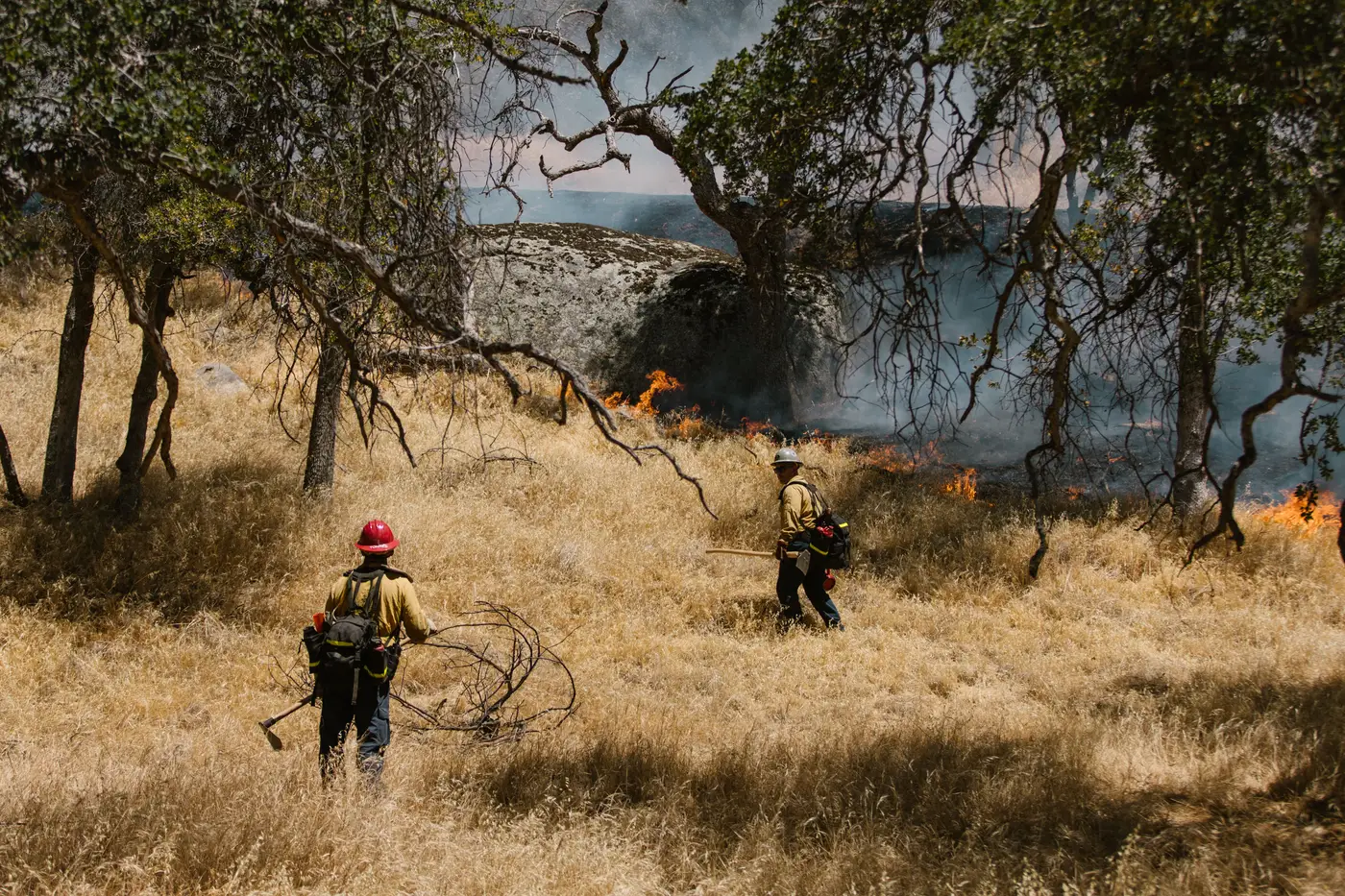
Both show up as a bulge or a detached blob outside your mapped line, and both get called in on the radio in the same breathless tone. But a slop-over and a spot fire are different problems with different resource orders attached, and the perimeter map is usually where the confusion starts.
What each one actually is
A slop-over happens when the main fire crosses a control line, a road, or a natural barrier and the fire front is still physically connected to the body of the fire. It's a containment failure at a specific point. Walk the line back and you'll find the gap, whether that's a burned-through dozer line, a spot of wind that pushed embers across a two-lane road, or a crew that got pulled off before mop-up.
A spot fire is a new, separate ignition started by a flying ember, sometimes a mile or more ahead of the front. It has no physical connection to the main perimeter. That detachment is the whole story: a spot fire can grow on its own terms, independent of what the main fire is doing, and if it's far enough out it can outrun containment efforts entirely before anyone on the ground even knows it's there.
Reading the distinction on the map
On a perimeter layer, a slop-over shows as a bulge or finger still attached to the existing polygon, usually right at a line segment you'd expect to be holding. The burn severity grading inside that bulge should look continuous with the fire that's already burned next to it, same fuel type, similar scorch pattern, because it's the same fire front that pushed through.
A spot fire shows as a separate polygon with open, unburned ground between it and the main perimeter. Daily SWIR-based detection is what catches these early, often before an air attack sees smoke or a lookout calls it in, because the active-fire signature picks up heat that hasn't produced visible smoke yet. Wide-swath satellite imagery covers the full area around the fire on each pass, so a spot fire ten miles off your eastern flank shows up on the same refresh as the main front.
The tell that trips people up: a slop-over right next to a thin, unburned strip can look like a spot fire on an older or coarser-resolution image, especially if the connecting fuel burned out fast and the gap reads as empty. Check the burn severity gradient across that strip. If it's thin but scorched, you're looking at a slop-over that jumped a narrow break. If it's wide and clean, with real distance and no heat signature in between on the prior day's pass, that's a spot fire.
Why the call changes what you do next
A slop-over is a line problem. It means reinforcing or relocating the control feature at that point: pulling a dozer back in, or backing off to the next ridge or road. The crews already assigned to that division can often handle it without pulling resources from elsewhere.
A spot fire is a new-start problem. It needs its own initial attack, its own resource order, and often its own division assignment if it's established enough to keep growing. Treating a spot fire like a slop-over means under-resourcing a fire that's about to make its own run, and treating a slop-over like a spot fire means pulling crews off a line that just needs to be rebuilt, not fought from scratch.
Getting the call right starts with having a current picture to call it from. A perimeter and burn severity layer refreshed daily is what lets you make that distinction before the morning briefing instead of guessing from yesterday's recon flight, and that's the piece we built this site around.
If you're working an active incident and need that read without waiting on the next flyover, take a look at what Fire Perimeter Map pulls together each day.