Blog
What is a patrol line, and why mop-up crews walk it after containment
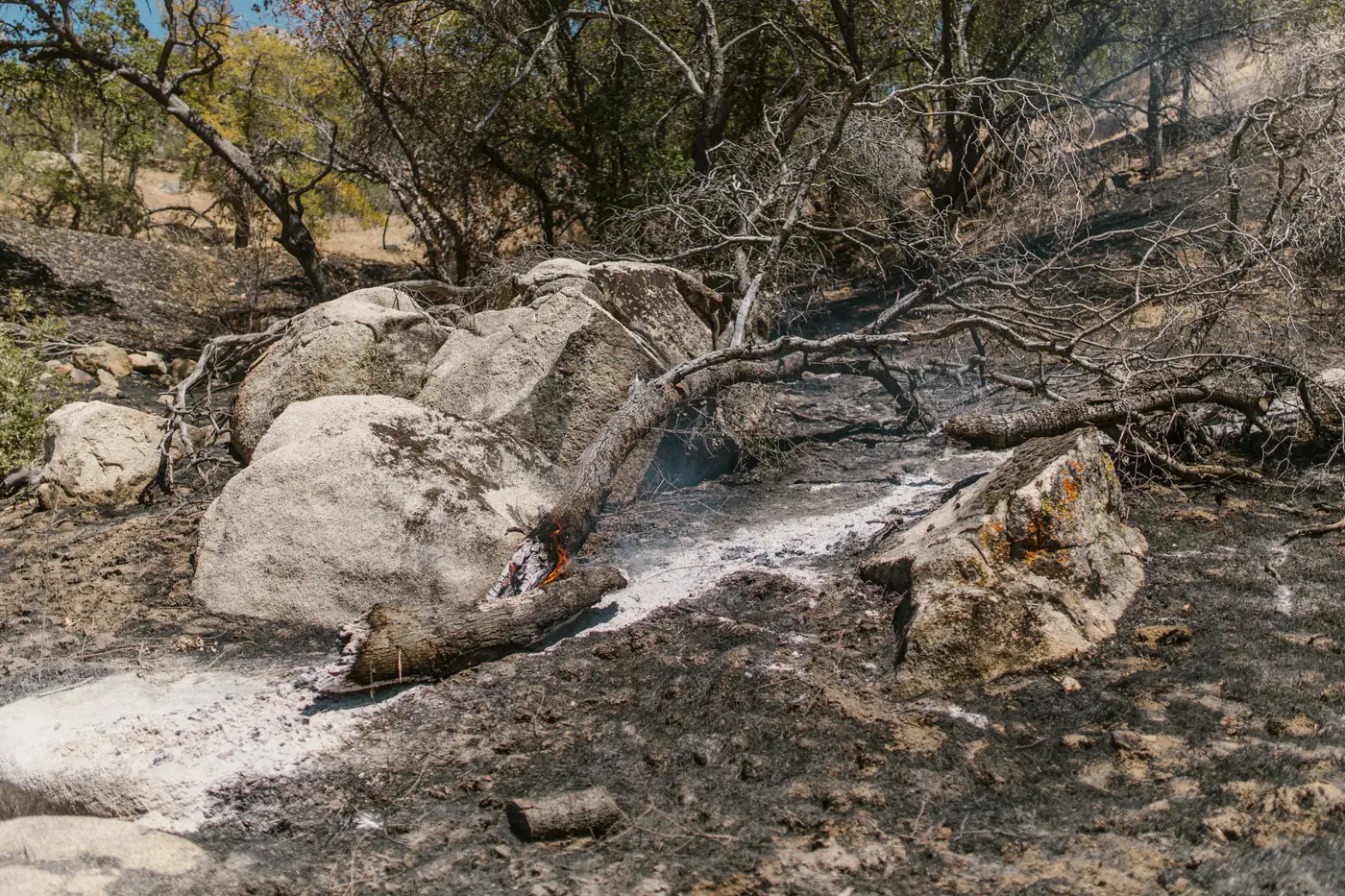
A patrol line is the stretch of completed fireline that crews walk, repeatedly, after the perimeter is declared contained, looking for anything on the black side that could still throw heat across the control line. It's not the fireline itself. The control line is where dozer operators, hand crews, or hose lays stopped the fire's spread. The patrol line is what happens to that same ground for days or weeks afterward, once the flame front is gone and the real work of making sure it stays gone begins.
Confusing the two causes real problems in the ops tent. "Containment" means the perimeter is fully enclosed by control line. It doesn't mean the fire is out. Stump holes keep smoldering. Root systems carry heat sideways underground for longer than anyone wants to admit, sometimes popping up thirty or forty feet from where you'd expect. A patrol line exists because a contained fire with unmopped heat near the edge is one wind event away from a slopover, and slopovers after "contained" is on the incident update are the ones that make the local news for the wrong reasons.
Patrol line vs. control line vs. mop-up
Three terms, three different jobs on the same ground:
- Control line is the physical barrier, dozer line, handline, road, or natural break, that stopped forward spread.
- Mop-up is the work: cold-trailing with the back of a hand, digging out stump holes, breaking apart burning logs, running hose if water's available.
- Patrol is the repeated act of walking the line after mop-up to catch what was missed or what heat found its way to the surface since the last pass.
A crew doesn't mop up once and leave. They walk the line, check it, come back the next operational period and walk it again. On a big fire with miles of perimeter, that patrol assignment gets divided up by division and handed out in the morning briefing like any other tactical assignment, except the objective isn't "hold the line," it's "confirm the line is cold."
Why crews keep walking it instead of calling it done
Heat hides. That's the whole reason patrol exists as its own task instead of being folded into initial mop-up. Duff layers insulate coals for a surprising amount of time, especially in heavier fuel types or where the burn was patchy rather than a clean scour. A spot that read cold to a bare hand on Tuesday can be smoking again by Thursday if wind or sun exposure changes. IR aircraft help spot the bigger holdover heat at night, but a lot of what patrol crews find is small enough that only a boot on the ground, or a hand held an inch off the duff, will catch it.
This is also where the distinction between the active edge and the already-burned interior matters for planning. Division sups aren't sending patrol crews to wander the whole burn scar at random. They want to know where the black is closest to green, where severity was light enough that unburned fuel pockets sit right against the line, and where the fire chewed through hot enough that the risk of holdover heat is low. A perimeter that's current and shows burn severity across the footprint makes that call a lot easier than relying on yesterday's hand-drawn division breaks, especially once the fire's grown past what one recon flight can cover in a day.
Patrol doesn't stop the moment containment is called, and it often outlasts the IMT's involvement entirely. Local resources frequently inherit patrol duty after a Type 1 or Type 2 team demobilizes, walking the same stretches on a thinning schedule until the fire's declared controlled, which can be weeks later depending on fuel type and season. Rain helps. A good soaking rain can shut down patrol faster than any crew can. Short of that, it's boots, water, and repetition until nobody can find heat anymore.
If you're the one drawing patrol assignments by division each morning, a daily perimeter and severity layer is worth a look before the next briefing.